
The 4 Attachment Styles: Why You Date the Way You Do
Every time a relationship ends, you swear you'll do things differently next time. But somehow, the same patterns keep repeating. You either cling too hard and scare people away, or you run the moment things get real. You attract the same type of person, fall into the same traps, and feel the same heartbreak. This isn't bad luck — it's your attachment style. Developed in childhood and hardwired into your nervous system, your attachment style is the invisible blueprint that dictates how you love, fight, communicate, and ultimately sabotage your relationships. Understanding it is the single most transformative thing you can do for your love life.
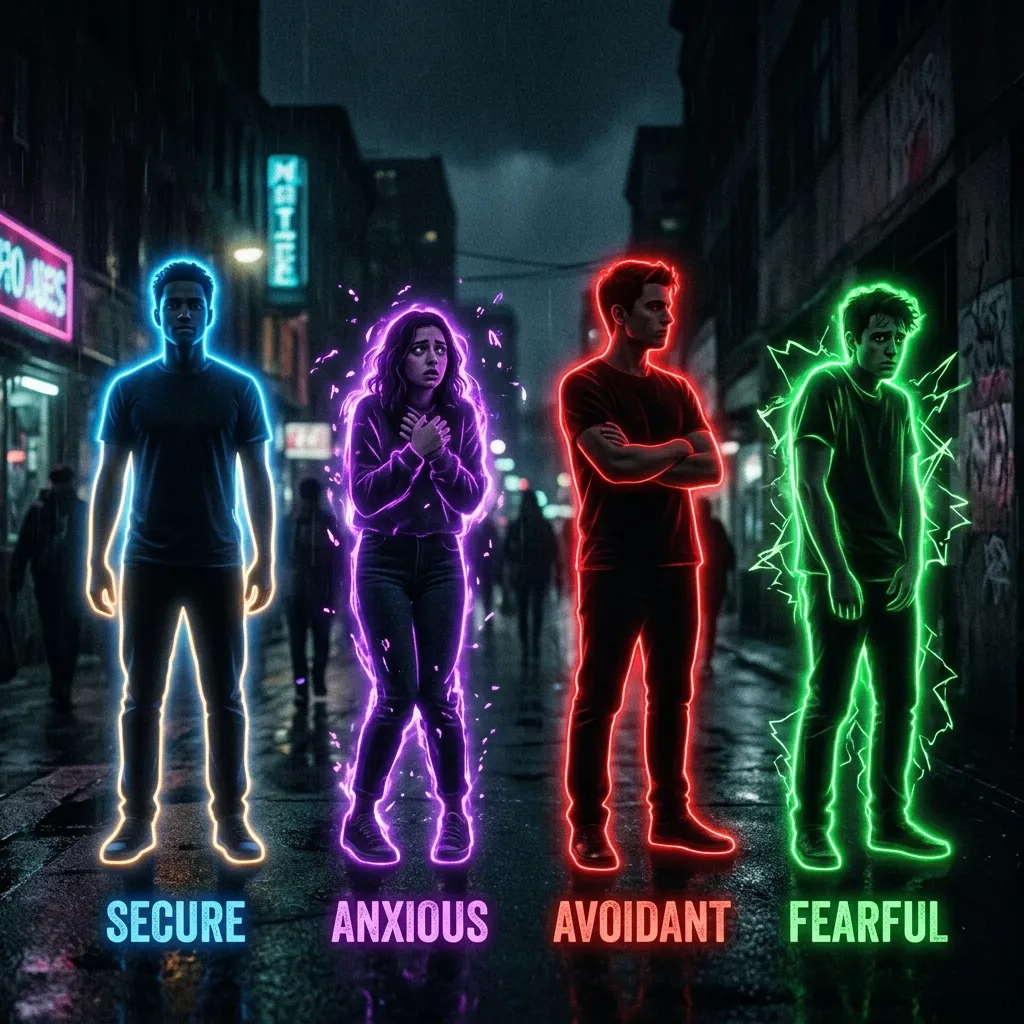
Secure Attachment: The Gold Standard
Securely attached people are comfortable with intimacy and independence in equal measure. They communicate their needs directly, they don't play games, and they can handle conflict without spiraling into panic or shutting down. They trust their partner and give them space without anxiety. If this sounds like a fantasy, that's because only about 50% of adults have a secure attachment style. They're not perfect — they just have a healthy foundation for navigating emotional terrain. If you're dating someone secure, it might actually feel boring at first because your nervous system is wired to associate love with chaos.
Anxious Attachment: The Overthinker
If you've ever sent a double text, checked their last seen 47 times, or spiraled because they used a period instead of an exclamation mark, you might be anxiously attached. Anxious attachment stems from inconsistent caregiving in childhood — sometimes your needs were met, sometimes they weren't. This created a hypervigilance around love. You crave closeness intensely but live in constant fear of abandonment. You become a detective, scanning for evidence that they're losing interest. The tragedy is that this very behavior — the neediness, the constant reassurance-seeking — often pushes partners away, confirming your deepest fear.
Avoidant Attachment: The Escape Artist
Avoidants are the people who pull away when things get serious. They value independence to an extreme degree, they're uncomfortable with emotional vulnerability, and they often idealize past relationships while devaluing current ones. Avoidant attachment typically develops when a child learns that expressing emotional needs leads to rejection or dismissal. They learned to self-soothe, to not need anyone. On the surface, they seem cool, independent, and unbothered. Underneath, they're terrified of engulfment — of losing themselves in another person. They're not heartless; they're just protecting a very old wound.
Fearful-Avoidant: The Push-Pull Paradox
The rarest and most turbulent style. Fearful-avoidants desperately want love but are simultaneously terrified of it. They swing between anxious and avoidant behaviors unpredictably — one day they're all in, the next they're completely withdrawn. This style often stems from childhood trauma or chaotic early relationships where the source of love was also the source of fear. Dating a fearful-avoidant feels like emotional whiplash. Being a fearful-avoidant feels like being at war with yourself. The good news: all attachment styles can shift toward security with awareness and intentional work.
Your attachment style is not your destiny — it's your starting point. The first step toward healthier relationships is understanding the pattern you're unconsciously repeating. Once you see it, you can't unsee it. And that's when real change begins.
Don't just read about it.
Experience the internet's most brutally honest AI algorithm for yourself. Free and instant.
Analyze My Attachment Style