
What is Limerence? When a Crush Turns Into an Obsession
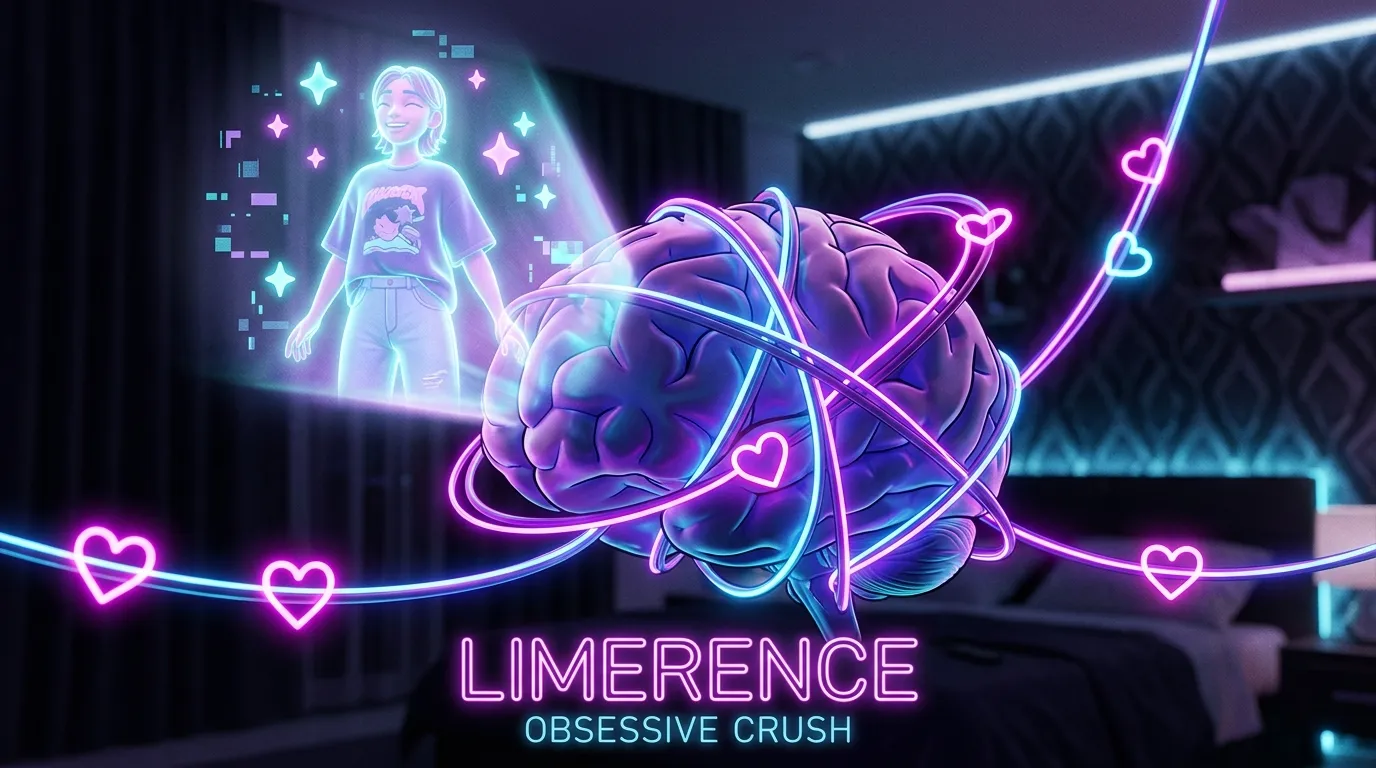
Have you ever met someone and instantly felt like they were the missing puzzle piece to your entire existence? Suddenly, every song on the radio is about them, you are checking their social media relentlessly, and your entire mood depends on whether or not they texted you back. We often romanticize this intense, all-consuming feeling as 'love at first sight' or a 'twin flame' connection. But psychology has a different, much less romantic term for it: Limerence. Coined by psychologist Dorothy Tennov in the 1970s, limerence is a state of involuntary infatuation and obsession with another person. It is not about building a healthy, mutual partnership; it is about an agonizing craving for reciprocation. If your crush feels more like a roller coaster of anxiety than a joyful addition to your life, you might be caught in the grip of limerence. Let's unpack what it is, why it happens, and how to break the spell.
The Anatomy of Limerence
Limerence goes far beyond a normal crush. While a crush is a light, enjoyable attraction, limerence is heavy, intrusive, and deeply destabilizing. It is characterized by an obsessive need for your feelings to be reciprocated. Your brain fixates on the 'limerent object' (the person you are obsessed with) and analyzes every single interaction for hidden meanings. Did they use a period at the end of their text? Did they look at your story first? These tiny details dictate your emotional state. It is an emotional high when you receive a crumb of attention, followed by a devastating crash when they pull away. It is less about loving the person and more about being addicted to the fantasy of them.
- →Intrusive, uncontrollable thoughts about the person taking up your day.
- →Extreme emotional highs and lows based on their actions.
- →A desperate need for emotional reciprocation and validation.
- →Ignoring glaring red flags because they ruin the fantasy.
Intrusive Thoughts and The Halo Effect
One of the hallmarks of limerence is the 'Halo Effect.' Because you are obsessed with the fantasy of this person, your brain completely ignores their flaws. They become a flawless, idealized deity in your mind. Even if they are rude, inconsistent, or emotionally unavailable, you will make endless excuses for their behavior. 'They are just scared of commitment because they were hurt in the past,' you tell yourself. These intrusive thoughts make it impossible to focus on your work, your hobbies, or your friends. The limerent object consumes your entire mental bandwidth, leaving no room for reality to set in.
The Breadcrumbing Trap
Limerence actually thrives on uncertainty. If someone is completely available and consistently shows you love, limerence usually fades, replaced by genuine, calm attachment (or sometimes boredom, if you are addicted to the chaos). But if someone gives you mixed signals—flirting one day and ignoring you the next—it acts like gasoline on the fire of limerence. This intermittent reinforcement, also known as breadcrumbing, keeps you constantly hooked, waiting for the next hit of dopamine. You become obsessed with 'cracking the code' to make them love you consistently.
- →Feeling addicted to the cycle of them pulling away and coming back.
- →Over-analyzing their mixed signals instead of walking away.
- →Believing that if you just act perfectly, they will finally commit.
- →Staying in a toxic dynamic just for the rare moments of affection.
Limerence vs. Love
It is crucial to understand that limerence is not love. Love is rooted in reality. It involves seeing a person for who they truly are—flaws and all—and choosing to build a partnership with them based on mutual respect, trust, and consistent effort. Love brings peace to your nervous system. Limerence, on the other hand, is rooted in fantasy. It is about projecting your own unmet needs and desires onto a blank canvas. Limerence triggers your fight-or-flight response, keeping you in a constant state of anxiety and longing. If your connection feels like a constant battle for validation, you are not in love; you are in limerence.
Breaking the Spell
Healing from limerence requires a brutal reality check. You have to force yourself to take them off the pedestal. Start writing down their actual flaws and the ways they have disappointed you. Go completely no-contact; you cannot heal an addiction while still taking hits of the drug. Stop checking their social media. More importantly, turn the focus inward. Limerence often happens when we are deeply unfulfilled in our own lives and are looking for someone else to save us. Invest that intense, obsessive energy into your own goals, therapy, and self-love. The spell will break when you realize you don't need them to make you whole.
Limerence is an exhausting, emotionally draining experience that can steal months or even years of your life if left unchecked. By recognizing the signs—the obsessive thoughts, the halo effect, the addiction to mixed signals—you can start to pull yourself out of the fantasy and back into reality. True love should not feel like an agonizing guessing game or a constant rollercoaster of anxiety. True love feels like coming home. Break the cycle of limerence, choose yourself, and make space for a connection that actually brings you peace.
Don't just read about it.
Experience the internet's most brutally honest AI algorithm for yourself. Free and instant.
Learn Healthy Attachment