
The 5 Love Languages: Which One Are You (and Why It Matters)?
You cook them dinner, clean the apartment, and run their errands — and they complain that you never say 'I love you' enough. They text you compliments all day, write you love notes, and shower you with verbal adoration — and you feel unloved because they never just sit and watch a movie with you without scrolling their phone. This isn't incompatibility — it's a love language mismatch, and it's the silent killer of otherwise great relationships. Developed by Dr. Gary Chapman, the five love languages framework explains that people give and receive love in fundamentally different ways, and most relationship conflicts stem from speaking different emotional dialects.
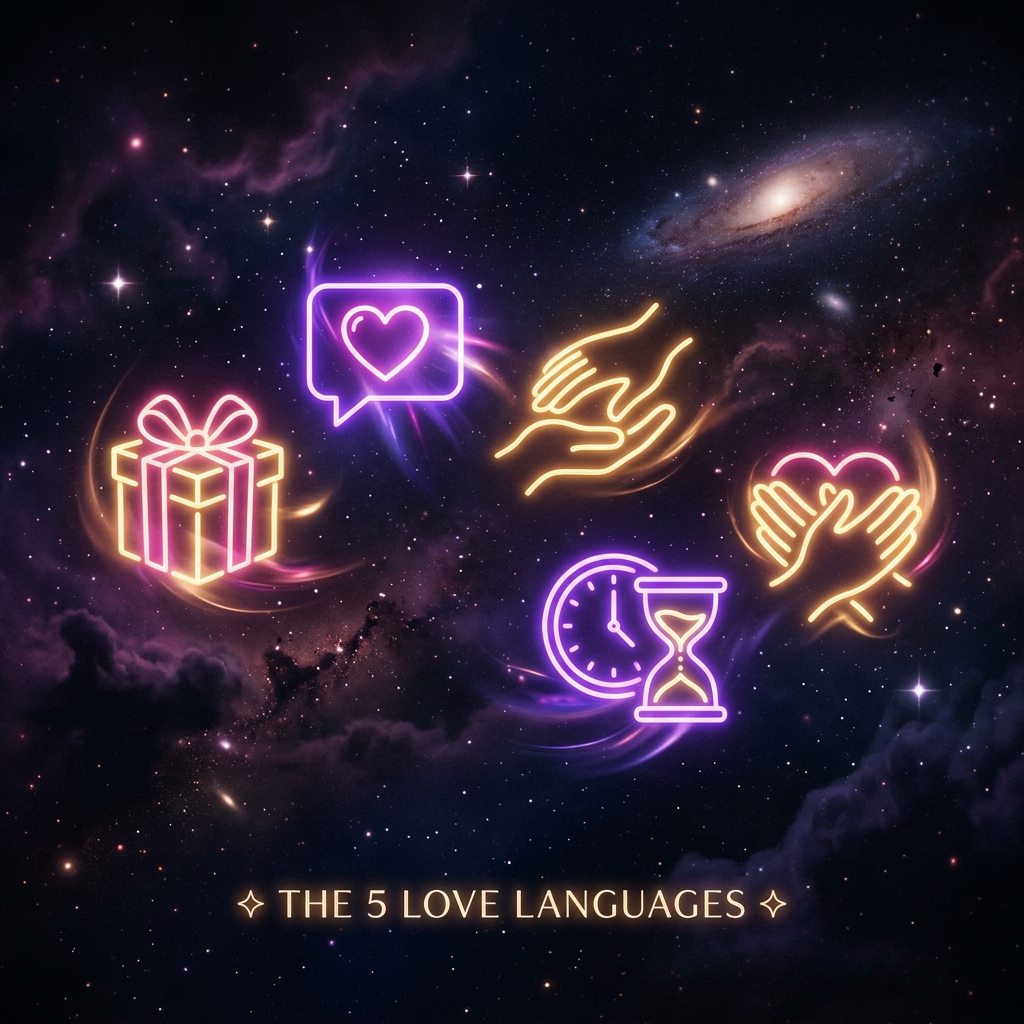
The Five Languages Decoded
Words of Affirmation: You feel loved through verbal expression — compliments, encouragement, 'I love you,' and texts that show they're thinking of you. Physical Touch: Hugs, hand-holding, cuddling, and physical presence make you feel safe and connected. It's not just about intimacy — it's about constant, reassuring physical closeness. Quality Time: You feel loved when someone gives you their undivided, fully present attention. A distracted partner on their phone is your worst nightmare. Acts of Service: Actions speak louder than words for you. When someone does your laundry, fills your car with gas, or handles a stressful task for you, that IS their 'I love you.' Receiving Gifts: It's not about materialism — it's about the thought, effort, and symbolism behind a gift. A random $5 coffee means more to you than a generic 'thinking of you' text.
Why Mismatched Languages Destroy Relationships
Here's the trap: we instinctively express love in OUR language, not our partner's. If your language is Acts of Service, you'll show love by doing things for your partner. But if their language is Words of Affirmation, they won't even register your efforts as love — they'll just think you're being helpful while emotionally neglecting them. Meanwhile, you'll feel unappreciated because they never acknowledge all the things you do. Both of you are pouring love into the relationship — but you're pouring it into cups the other person can't drink from. This creates a cycle of escalating resentment where both partners feel unloved despite both actively loving.
Reklam
How to Discover and Apply Your Love Language
The fastest way to discover your love language is to ask yourself: what hurts the most when it's missing? If silence kills you, your language is Words of Affirmation. If distance makes you feel rejected, it's Physical Touch. If being ignored or phone-scrolling during dinner enrages you, it's Quality Time. Once you know yours and your partner's, the goal isn't to change your natural language — it's to become bilingual. Learn to express love in THEIR language, even if it doesn't come naturally to you. It's a skill, and like any skill, it gets easier with practice.
The love languages framework isn't a magic solution, but it is an incredibly powerful diagnostic tool. Most relationship problems aren't about a lack of love — they're about a lack of translation. When you learn to speak your partner's language, the love that was always there finally gets through.
Don't just read about it.
Experience the internet's most brutally honest AI algorithm for yourself. Free and instant.
Check Our Compatibility